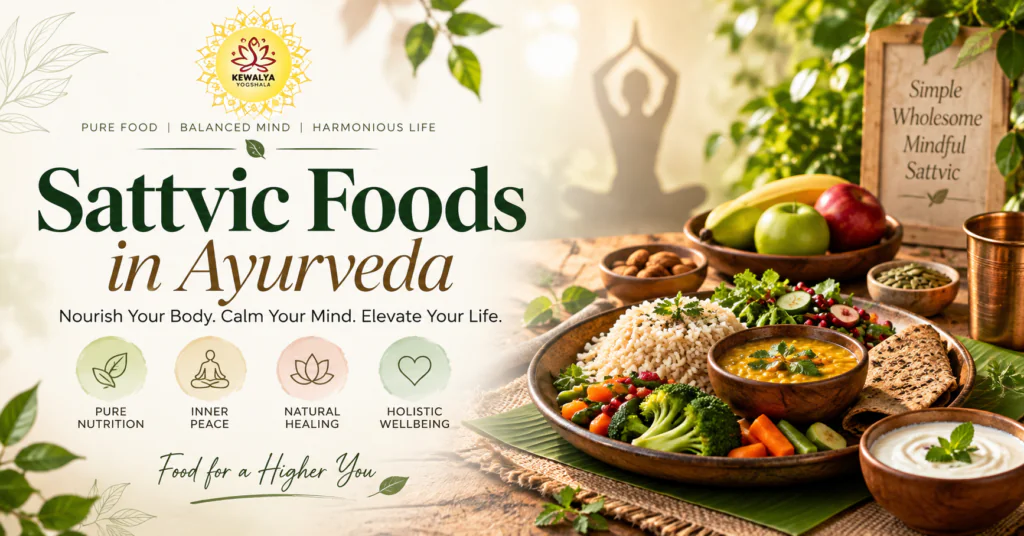
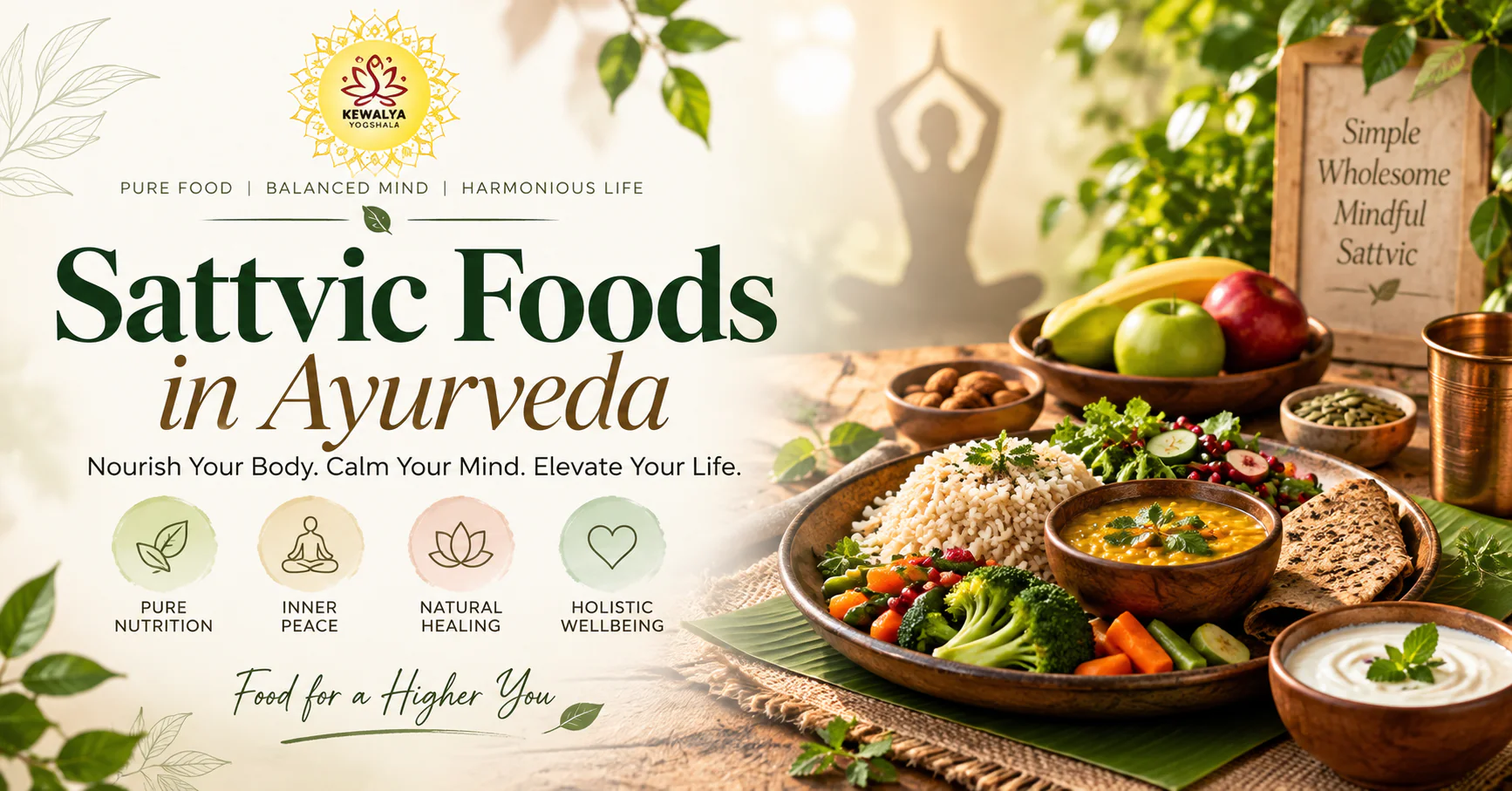
Food is an important part of the yogic and Ayurvedic lifestyle. In Ayurveda food quality is considered in relation to digestion, lifestyle, daily routine and individual constitution. In Ayurveda, a Sattvic diet is composed of fresh, wholesome, and naturally nourishing foods that are traditionally associated with clarity, balance, and a calm state of mind.
exploring yoga, meditation and holistic wellness, understanding Sattvic Foods in Ayurveda can be a useful step toward developing healthier eating habits. Kewalya Yogshala is of the opinion that yoga is not merely a physical exercise, it comprises of pranayama, meditation, philosophy, lifestyle and food choices.
This guide will teach you what is meant by sattvic food, the traditional benefits of sattvic foods, what foods are generally included, what to restrict, and how a sattvic approach can work with your yoga practice.
What Are Sattvic Foods in Ayurveda?
The term sattvic is derived from Sattva, one of the three Gunas in Indian philosophical traditions. Sattva is traditionally associated with clarity, harmony, balance and awareness.
A sattvic diet, in general, is about eating fresh, seasonal, simple and nourishing foods. Examples of a healthy diet are fresh fruits, vegetables, whole grains, pulses, nuts, seeds, milk and suitable dairy products, to be chosen depending on the needs and tolerance of the individual.
The concept is not to adhere to a rigid food list. Ayurveda talks about food in terms of digestion, constitution, season, quantity, preparation and lifestyle.This makes the sattvic approach particularly appropriate to those who want their meals to support a disciplined yogic lifestyle.
Ayurveda Sattvic Diet and Three Gunas
Ayurvedic and yogic traditions often speak of food in terms of the three Gunas:
- Sattva: It is related to purity, balance, calmness and clarity.
- Rajas: Linked with activity, stimulation, restlessness and intensity.
- Tamas: heaviness, dullness, inertia.
A sattvic diet is one that seeks to increase foods that are light, fresh and nourishing while decreasing foods that induce excessive stimulation and heaviness. But that doesn’t mean that every food has the same effect on everyone. Diet should be practical and individualized, as Ayurveda emphasizes the individual’s constitution and digestive capacity.
Benefits of Sattvic Food
The traditional benefits of sattvic foods are more about balanced living than a single health outcome. A wholesome diet, along with yoga, sleep, movement and mindful eating can help support overall wellness.
1. Helps to Keep Your Mind Calm and Clear
In a sattvic lifestyle, foods are typically fresh and lightly prepared. These foods are often chosen by practitioners because they appear lighter and more appropriate for meditation and mindful living. Mindful eating can be another step in developing awareness for someone who regularly practices meditation or pranayama.
2. Supports healthy digestion
Many foods found in a sattvic diet such as fresh vegetables, fruits, whole grains and pulses can provide nutrients and dietary fiber in a well-rounded diet. Ayurveda gives a lot of importance to Agni or the power of digestion. The old way isn’t just eating massive quantities of supposedly healthy foods, but paying attention to hunger, digestion, food combinations and when to eat.
3. Gives Nutrient Rich Daily Nutrition
A well planned vegetarian diet can provide a variety of nutrients from grains, pulses, vegetables, fruits, nuts and seeds
The trick is to mix them up, to keep them in balance. A sattvic meal can be very simple. Simple foods made from suitable ingredients may be the basis of a practical daily diet.
4. Works Well With Yoga & Meditation
Food and yoga can be incorporated as part of a broader lifestyle. Kewalya Yogshala blends traditional asanas, pranayama and meditation with an understanding of yogic lifestyle and food choices. Those who wish to build upon this connection may find Yoga and Ayurveda Training in Dehradun at Kewalya Yogshala.
5. Promotes Mindful Eating
A sattvic approach isn’t just about your food. It can also help with awareness of how and when you eat . Mindful eating can be incorporated into daily meals by eating slowly, avoiding unnecessary distractions, choosing appropriate portion sizes and paying attention to digestion.
List of Sattvic Foods
There is no single, universal sattvic food list that can be applied uniformly to everyone. However, the following foods are generally associated with a sattvic style diet:
1. Fruits
Often fresh, ripe and in-season fruits are used.
Examples are:
- Apples.
- Bananas
- Papaya
- Pomegranates Guavas Pears Oranges
- Sweet melons
- Seasonal mangoes
- Coconuts
Fresh fruit can also be a simple breakfast item or a light snack depending on one’s digestive and dietary needs.
2. Seasonal Vegetable
Fresh vegetables are a vital part of a balanced vegetarian diet.
Typical options include:
- Carrot
- Lauki / Bottle gourd
- Pumpkin Cucumbers
- Spinach and other leafy greens
- Beet
- Green beans Zucchini Cauliflower Broccoli Sweet potatoes
Seasonal vegetables are particularly practical as they add variety and other nutrients to daily meals.
3. Whole Grain
Whole and less processed grains can be a source of energy and dietary fiber.
Typical choices are:
Rice Whole wheat Oats Barley Millets Quinoa
The grains are easily added to traditional Indian meals like khichdi, rice with dal, roti and vegetable-based meals.
4. Legumes and Pulses
Pulses can be a significant source of plant protein.
Possible good options include:
- Moong dal
- Masoor dhal
- Tuvar dal
- chick peas
- Beans, green
- Other legumes, well-cooked
Moong dal is very popular in simple Indian meals as it is versatile and can be prepared in light dishes.
5. Seeds and nuts
Nuts and seeds supply healthy fats, protein and minerals to the diet.
Examples:
- Almonds
- Walnut
- Moderate amounts of cashews
- Sesame seeds
- Seeds, pumpkin
- Sunflower Seed
- Flax seeds
Portion size is important as nuts and seeds are nutrient dense foods.
6. Milk products
Some traditional sattvic dietary practices may include appropriate dairy products like fresh milk, ghee and some form of curds or yogurt.
But dairy is not for everyone. Those with lactose intolerance, milk allergy or other dietary restrictions should opt for appropriate alternatives instead of blindly following a food rule.
Sattvic Diet: Foods That Are Usually Avoided
A sattvic lifestyle emphasizes fresh, natural foods and may restrict foods that are too stimulating, or heavy or highly processed. Commonly restricted foods may include, depending on the particular yogic or Ayurvedic tradition:
- Packaged foods (highly processed)
- Fried food too much
- Prepartions very hot
- Too much sugar
- Leftover food
- Large meals
- Too much caffeine.
- Ethanol
- Foods eaten mostly for stimulation rather than nutrition
The details of the diet may vary from tradition to tradition, and person to person. The aim should be a sustainable, balanced eating pattern, not unnecessary restriction.
How to Implement a Sattvic Diet in Everyday Life?
You don’t have to change your diet all at once. Small, steady improvements are easier to stick with.
Start With Simple, Fresh Dishes
Opt for vegetable, whole grain, pulse and seasonal ingredient based meals. Simple, balanced meals can be easily made by modifying traditional Indian dishes. A meal might comprise moong dal, seasonal vegetables, rice or roti and a suitable side.
Watch Your Eating Schedule
Regular meals can help give you some structure in your day. Ayurveda emphasizes digestion and routine a lot and it is better to eat according to your hunger and routine than to follow strict diet charts from the internet.
EatMindfully
Try to sit down to eat your meals instead of working or constantly using your phone while you eat. Eat well and see how different foods affect your energy and digestion.
Final Thoughts
Knowing about Sattvic Foods in Ayurveda can be a good addition to a regular yoga routine in Dehradun. Instead of viewing food as a diet with an expiration date, it can be about creating sustainable habits that promote daily health and wellness.
Kewalya Yogshala is a school of yoga which offers courses in Hatha Yoga, Ashtanga Yoga, pranayama, meditation and yoga therapy. They follow both traditional and modern methods.
it’s not about treating yoga as just an exercise, it’s about holistic learning. Its programs include traditional practices like asana, pranayama, meditation and yoga philosophy, as well as Ayurveda and wellness education.
The school’s yoga and Ayurveda training also includes learning around Ayurvedic meal planning and healthy food choices, showing how nutrition can be discussed as part of a wider yogic lifestyle.
Common Asked Questions
A. Sattvic foods are foods that are traditionally associated with the quality of Sattva, which is a quality associated with clarity, balance and harmony. These should normally contain fresh fruits, vegetables, whole grains, pulses, nuts, seeds and appropriate dairy products.
A. The normal sattvic food list includes seasonal fruits and vegetables, rice, whole grains, moong dal, other appropriate lentils, nuts, seeds, milk, ghee, and fresh, mildly cooked food.
A. The classical virtues of sattvic foods are associated with a balanced lifestyle, conscious eating and the promotion of a calm and clear state of mind. A healthy diet also improves the overall quality of the diet when it is diverse and well planned.
A. “Yeah. Many yoga traditions associate mindful eating with yoga practice. Asana, pranayama and meditation can be supplemented by a simple, balanced diet, but individual dietary needs should always be considered.
A. Not in the same shape necessarily. Health, allergies, digestion, age, activity level and personal circumstances affect diet needs. In traditional Ayurveda, the focus is on the individual needs and not on a single diet for all.