Knee pain can make simple everyday tasks like walking, climbing stairs, sitting on the floor, or exercising uncomfortable. Some knee pain may get better with rest but pain, stiffness, and loss of mobility that do not resolve may require a more structured approach. In Ayurveda, the state of the joints is usually related to the body type, way of life, digestion, condition of the tissues, and balance of doshas.
Knee pain Panchakarma Therapies for is one traditional Ayurvedic approach that may be considered for a personalized wellness and treatment plan. Panchakarma is not a single type of therapy. It is a traditional Ayurvedic system in which the selection of procedures is based on the condition and constitution of the person. For people suffering from knee discomfort, therapies like Janu Basti for knee pain, Abhyanga, Swedana, and Basti therapy can be taken under the guidance of a qualified Ayurvedic practitioner.
Kewalya Yogshala blends Ayurveda with yoga and other traditional wellness practices. The organization also promotes Ayurveda, Panchakarma, and other wellness knowledge in its programs.
What Ayurvedic Treatment is there for knee pain?
Ayurvedic treatment for knee pain is based on the understanding of possible contributing factors and not treating every person in exactly the same way. Ayurveda traditionally takes into account factors such as age, lifestyle, digestion, activity level, constitution, and doshic imbalance to develop an individualized approach.
Some common causes of knee pain include: Overuse Past Injury Age-related changes in inflammation Muscle weakness, osteoarthritis Therefore, the right Ayurvedic knee pain treatment can range widely from person to person.
Depending on the assessment, an Ayurvedic practitioner might suggest external therapies, oil application, therapeutic heat, lifestyle modifications, gentle movement, dietary adjustments, or Panchakarma procedures. The aim, as a rule, is to help comfortable movement, to remove stiffness, and to support general musculoskeletal health, not to promise a cure in an instant.
How Panchakarma can help with Knee Pain?
Panchakarma therapy for knee pain would be a combination of traditional procedures selected as per the requirements of the individual. Ayurvedic practice may use therapies to promote the body’s natural processes and increase comfort and mobility. For knee-related complaints, treatment may include local therapies e.g. Janu Basti, full body or local Abhyanga, and Swedana and Basti therapy where clinically appropriate.
The precise combination depends on the condition of the person. If you have chronic knee problems, you’ll need a very different approach than someone with occasional stiffness. Panchakarma for knee pain is not a substitute for necessary medical treatment; it is also important to know. If you have knee pain from a major injury, infection, or other serious condition, you need to get the proper medical evaluation.
Knee Pain Panchakarma Treatment
Knee Pain Panchakarma Treatment uses Ayurvedic therapies to reduce stiffness, ease discomfort, and support better joint mobility.
1. Knee Pain—Janu Basti
Janu Basti for knee pain is one of the commonly discussed Ayurvedic local therapies for knee discomfort. “Janu” means knee, and “Basti” means a therapeutic retaining method.
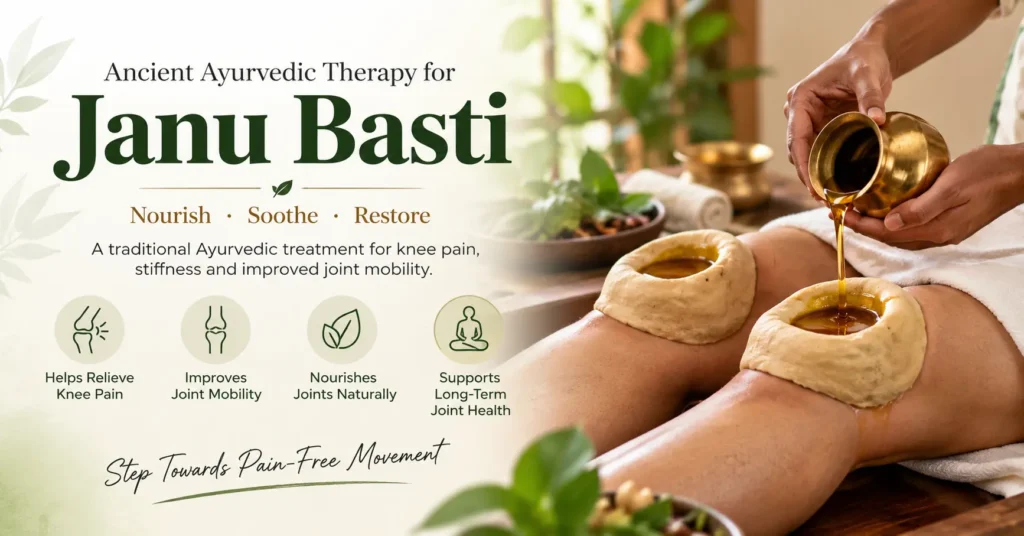
Traditionally, a dough ring is put around the knee during the procedure and filled with comfortably warm herbal oil or a prescribed liquid. The liquid stays in the body for a period of time under the supervision of the practitioner.
Traditionally Janu Basti is used to support:
- Comfort in the knees
- Rest in the local
- Control of stiffness
- Mobility of joints
- Laxity of the muscles around the knee
Some people also search for Janu Vasti for knee pain, which is another spelling that is often used for the same traditional therapy. A trained practitioner should determine the temperature, oil, duration, and frequency rather than having a fixed routine.
2. Ayurvedic Oil Massage (Abhyanga)
Abhyanga is an Ayurvedic traditional oil massage that can be incorporated as a part of a person’s wellness or therapeutic plan. A suitable oil massage can help to relax you and make movement easier if you have muscular tightness and rigidity around the knees.
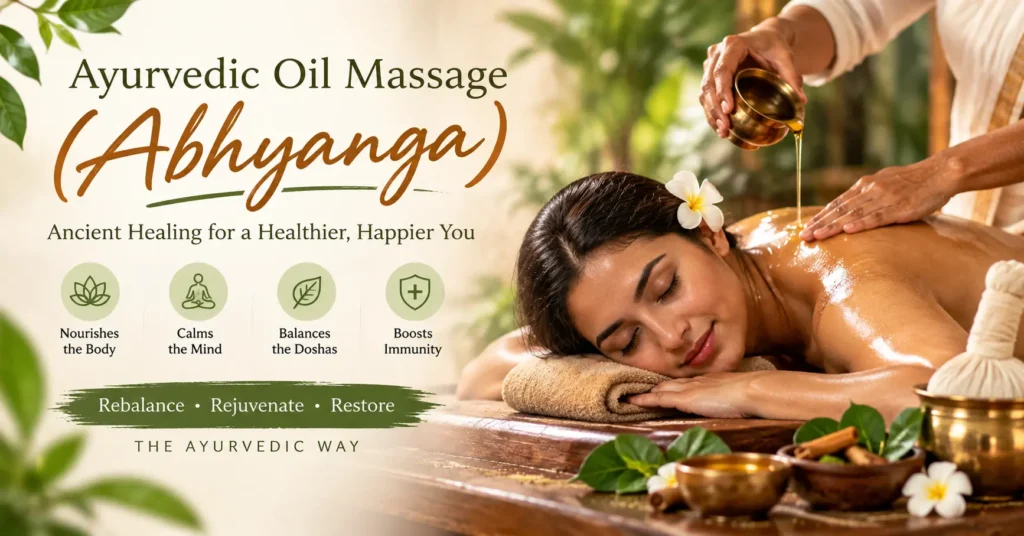
An Ayurvedic practitioner may choose a specific oil and technique based on the individual’s constitution and condition. Abhyanga can be integrated into the larger Ayurvedic lifestyle practices, rather than as a standalone treatment.
3. Swedana (Herbal Steam Therapy)
Swedana is a traditional Ayurvedic therapy of sweating or heat-based therapy. Herbal steam can be used after or in conjunction with oil application, depending upon the needs of the individual. Heat can help relax the muscles and provide temporary relief from the feeling of stiffness. However, heat treatments are not suitable for everyone.
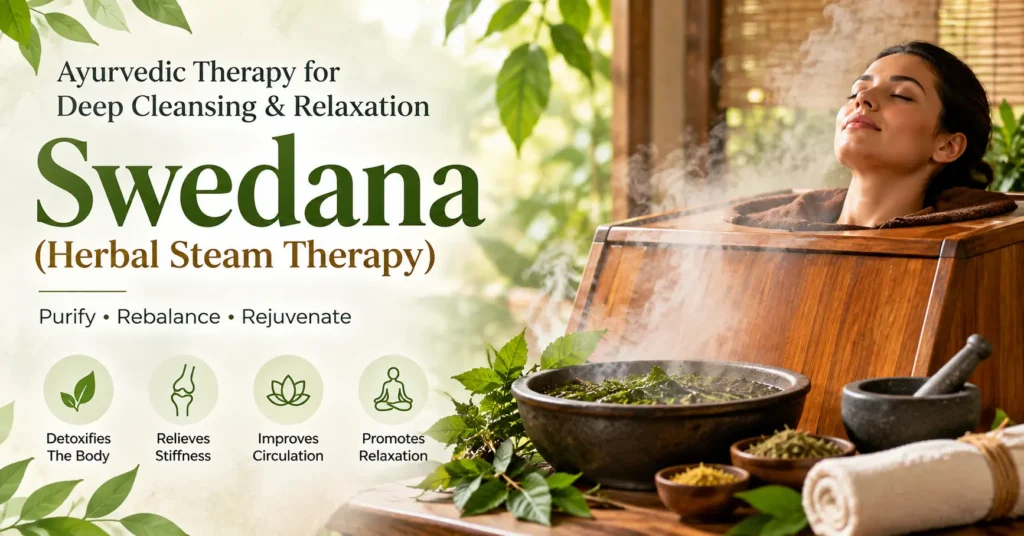
Swedana should not be performed by people with certain medical conditions, acute inflammation, fever, cardiovascular problems, or other contraindications, and professional advice should be obtained before undertaking Swedana.
4. Basti Treatment
Basti is an important therapy in traditional Panchakarma and traditionally used for management of conditions related to Vata dosha.
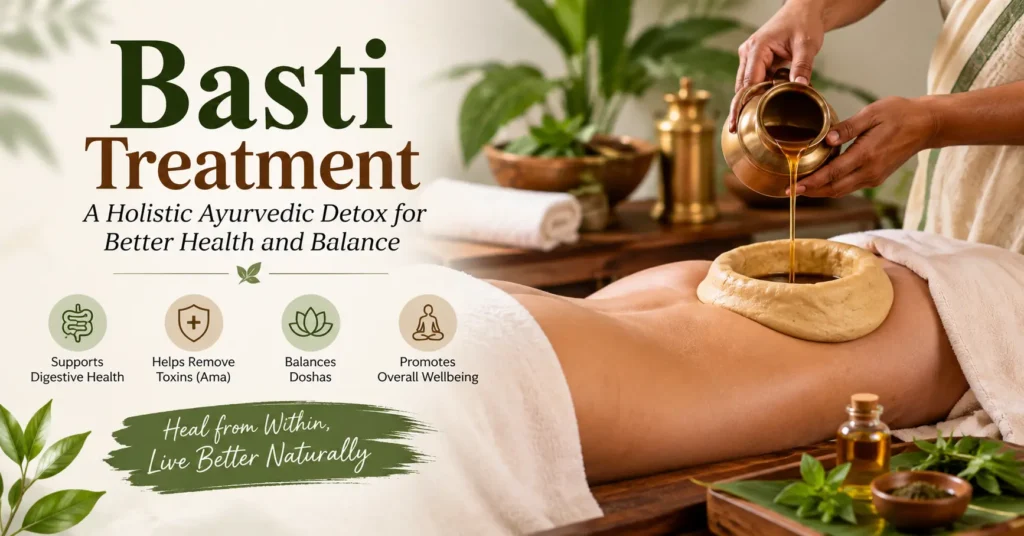
In Ayurvedic assessment, Basti may be indicated if there are joint or musculoskeletal complaints associated with certain patterns of imbalance. Basti is a specific therapeutic procedure and should only be done under the guidance of a properly trained Ayurvedic professional. This should never be tried as a self-treatment.
5. Pizhichil and Other Ayurvedic Treatments
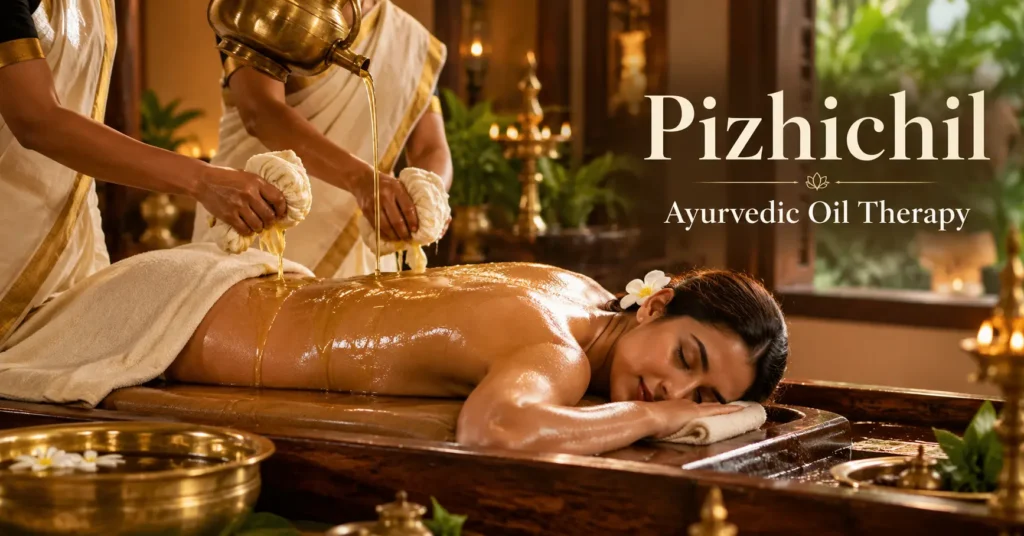
Pizhichil is another traditional Ayurvedic therapy where warm herbal oil is poured gently over the body, and specific massage techniques may be used. As part of a comprehensive Ayurvedic knee pain therapy plan, other Ayurvedic therapies may also be considered, depending on the individual’s condition.
Ayurvedic Treatment for Knee Arthritis & Osteoarthritis
Arthritis can affect your movement, comfort, and ability to do daily activities. Ayurveda considers joint health in the context of age, lifestyle, digestion, activity level and doshic balance. Therefore, an Ayurvedic treatment for knee arthritis may consist of a combination of traditional therapies, suitable movement, diet and lifestyle recommendations.
The goal is generally to improve joint comfort and function and to address individual factors that may be contributing to stiffness or discomfort. With the proper modifications, yoga and gentle movement can also be complementary to an Ayurvedic wellness plan. Kewalya Yogshala offers yoga therapy and also integrates therapeutic uses of yoga into its programs.
Knee Osteoarthritis Ayurvedic Treatment
Osteoarthritis affects the structure of a joint and most often affects weight-bearing joints, such as the knees. People seeking Ayurvedic treatment for knee osteoarthritis should be aware that Ayurveda may be considered as an adjunct for relief of symptoms and general well-being but should not be portrayed as a sure cure for structural changes in the joint.
An Ayurvedic plan can include therapies such as Janu Basti, Abhyanga, Swedana, Basti, or lifestyle recommendations depending on the individual. Proper assessment is especially important when osteoarthritis has been diagnosed.
Benefits of Ayurvedic Treatment for Knee Pain
The possible advantages of an appropriately selected Ayurvedic knee pain treatment may include:
- Helps joints to work comfortably
- Temporary relief of stiffness
- Relaxation of the muscles around the knee
- Supports mobility and flexibility
- Increased sense of physical relaxation
- Customized lifestyle advice
- Integration of traditional Ayurvedic practices with yoga and wellness practices.
Who Can Go for Panchakarma for Knee Pain?
Adults with problems like Panchakarma for knee pain may be considered by
- Recurrent knee stiffness
- Persistent or mild joint pain
- Not as flexible
- Stiffness in the knee (muscle tightness around the knee)
- Growing old aches and pains
- Knee Discomfort and Its Relationship to Lifestyle and Activity Patterns
- Some cases of arthritis or osteoarthritis, after professional assessment
This will be of particular interest to those who wish to integrate appropriate yoga, movement, and lifestyle practices with traditional Ayurvedic care. However, suitability depends on the individual’s age, health status, medications, diagnosis, and overall condition.
Related Post:- Ayurvedic Migraine Treatment in Dehradun
Final Thoughts
Choosing the right center is very important when considering Panchakarma for knee pain. The methodology at Kewalya Yogshala is to know the requirements of a person first and then suggest Ayurvedic therapies. Rather than the same treatment plan for everyone, therapies can be chosen based on the individual’s condition, lifestyle, and Ayurvedic assessment. When indicated, therapies like Janu Basti for knee pain, Abhyanga, and Swedana can be considered and are done as part of an individualized Ayurvedic approach.
Common Questions
A. There is no one best Ayurvedic treatment for each person. Janu Basti for Knee Pain, abhyanga, Swedana and Basti therapy may be done as per the person’s condition and Ayurvedic assessment.
A. Panchakarma can be considered as an adjuvant therapy for knee pain in knee osteo-arthritis. But it should not be sold as a sure cure or a substitute for evidence-based medical treatment.
A. Janu Basti In this process, warm herbal oil is applied around the knee for a specific time. Traditionally it is used to support local relaxation, comfort and mobility. Results may differ from person to person.
A. Duration is variable depending on condition, age, severity of symptoms, and therapy chosen. Some patients will need a short course of local therapies, and others will require a longer personalized program.
A. There is no guaranty that Panchakarma will cure knee pain completely. Injuries, arthritis, osteoarthritis and other medical conditions can cause knee pain. Treatment depends on the cause.