Fatty liver is now one of the most common liver problems in India, and many people discover it by chance on an ultrasound done for something else. If you are looking for fatty liver treatment in Dehradun, the first step is a proper diagnosis from a doctor. After that, Ayurveda can support the lifestyle changes that matter most. Its explains what fatty liver is, what actually helps, how Ayurveda approaches it, how to use herbs safely and when to see a doctor. It is general information, not medical advice.
What is Fatty Liver?
Fatty liver means extra fat has built up inside liver cells. Doctors now call the common form MASLD, which used to be called NAFLD. It is linked with excess weight, type of 2 diabetes, high cholesterol and a sedentary lifestyle, and it is different from liver damage caused by heavy drinking. One Indian report says excess body weight is present in almost 90 per cent of NAFLD patients.
Early fatty liver usually causes no symptoms. Some people feel tired or notice discomfort in the upper right abdomen. Diagnosis needs blood tests and an ultrasound, and sometimes a FibroScan. With treatment, the condition can often improve or even be reversed before permanent liver damage occurs.
Fatty Liver Treatment in Ayurveda
In Ayurvedic thinking, the liver is linked with pitta, and excess body fat with kapha and the fat tissue (meda). A plan aims to improve digestion (agni), reduce heavy, oily and sweet foods, and calm aggravated pitta. The tools include diet, daily routine, exercise or yoga, herbs and, in some cases, therapies such as Panchakarma under a qualified physician.
These are traditional frameworks, not proven anatomy. What matters is where they overlap with modern evidence: better food, regular movement, steady sleep and less alcohol.
What Modern Medicine Says Works Best?
For most people with MASLD, weight loss is the main treatment, and losing 7% to 10% of body weight can reduce liver inflammation and improve scarring. Exercise can reduce liver fat even before weight is lost, and even low levels of alcohol can raise the risk of serious liver problems. Limiting free sugars and saturated fat also helps. A safe pace is about 0.5 to 1 kg a week, not a crash diet.
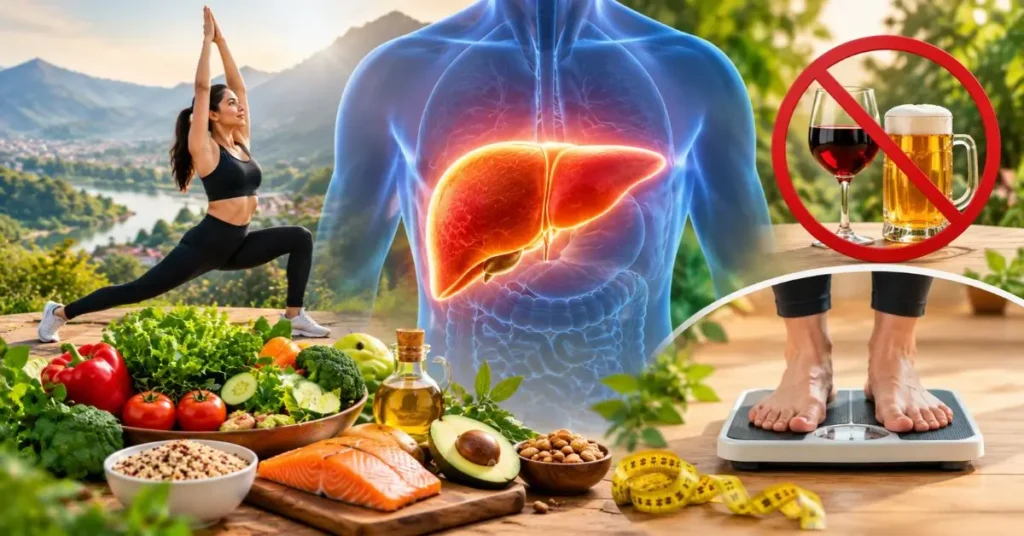
So judge any Ayurvedic plan by one test: does it help you eat better, move more, avoid alcohol and lose weight safely?
Fatty Liver Diet According to Ayurveda
The Ayurvedic approach is simple and mostly practical. Our Ayurvedic diet article covers the basics. In short:
- Eat warm, freshly cooked, lighter meals at regular times, with an early dinner.
- Choose fibre-rich whole grains. Uttarakhand’s own mandua (finger millet) and jhangora (barnyard millet) can replace refined flour.
- Add vegetables such as lauki, tori, karela, methi and palak, and dals such as moong and gahat.
- Have buttermilk instead of sweet drinks.
- Cut down on fried food, sweets, maida, cold drinks and packaged snacks.
- Avoid alcohol completely.
Do not drop whole food groups on your own, especially if you have diabetes.
Ayurvedic Herbs for Liver Health: The Evidence Indicates That
Herbs often named for the liver include bhumyamalaki (Phyllanthus niruri), kutki, guduchi, bhringraj, amla and haldi. Some look promising in small studies, but research in fatty liver is limited, and none replaces diet, exercise and medical follow-up. Doses and quality vary widely between products, so never self-prescribe a combination.
Fatty Liver Ayurvedic Medicine: Using It Safely
Herbal and Ayurvedic products can themselves injure the liver, especially poor-quality or metal-containing preparations. To stay safe:
- Use only products from licensed manufacturers, and only on a qualified Ayurvedic doctor’s advice.
- Avoid taking several products together.
- Inform your physician and Ayurvedic healer about all the things you consume, including dietary supplements.
- Stop and seek medical help if you develop yellow eyes or skin, dark urine, severe tiredness or abdominal pain.
Painkillers deserve attention too. Some over-the-counter medicines also strain the liver, so tell your doctor about every drug and supplement you take. If you live with migraine and use pain medicines often, ask your doctor which ones are safe for your liver. Kewalya Yogshala also Ayurvedic migraine treatment among its services, and any such plan should be shared with your doctor too.
Natural Treatment for Fatty Liver: Daily Habits for a Better Life
- Walk briskly for about 30 minutes on most days, and add simple strength exercises.
- Sleep 7 to 8 hours at a regular time.
- Choose water or buttermilk over sweet drinks.
- Aim for slow weight loss, not crash diets.
- Repeat blood tests and scans as your doctor advises.
Yoga can be part of this routine. If you prefer supervised practice, Kewalya Yogshala runs yoga classes. Choose a level that suits your fitness, and tell the teacher about your liver condition.
Conclusion
See a doctor, ideally a gastroenterologist or hepatologist, if an ultrasound shows fatty liver, if your liver enzymes are raised, or if you have diabetes, high cholesterol or obesity. Seek urgent care for jaundice, vomiting blood, black stools, a swollen abdomen or confusion.
The use of Ayurveda for the liver is more effective when used together with conventional medicine. It is advisable to inform both your physician and the Ayurvedic therapist about your reports. For fatty liver treatment in Dehradun, a clear diagnosis comes first, and the plan follows.
Question & Answer
A. No evidence shows that Ayurveda alone cures it. Early fatty liver can improve with weight loss, exercise and no alcohol, which an Ayurvedic plan can support, but you still need a doctor’s diagnosis and follow-up.
A. Early-stage fatty liver often improves with sustained lifestyle changes. Advanced scarring (cirrhosis) is harder to reverse, which is why early checks matter.
A. No, one cannot do that without being cautious. Certain herbs react with certain drugs while some formulations may be harmful for the liver. It is advisable to disclose all information to your doctor and Ayurvedic healer.
A. It varies. Many doctors repeat blood tests and scans after a few months of steady lifestyle changes. Do not judge progress by how you feel alone.
A. It is safest to avoid it. Even low levels of alcohol can raise the risk of serious liver problems in people with fatty liver.